- Careers
We are looking for talent
At HP SCDS, talent is the foundation of what we do.
That is why we would like you to join our team.
Notice regarding our job postings
We don't have any job openings right now, but we invite you to check back with us so you don't miss out on future job postings.


HP Solutions Creation & Development Services
HP SCDS
C/ Julia Morros 1, Edificio Zarzuela - Parque Tecnológico de León. 24005 - León (SPAIN)
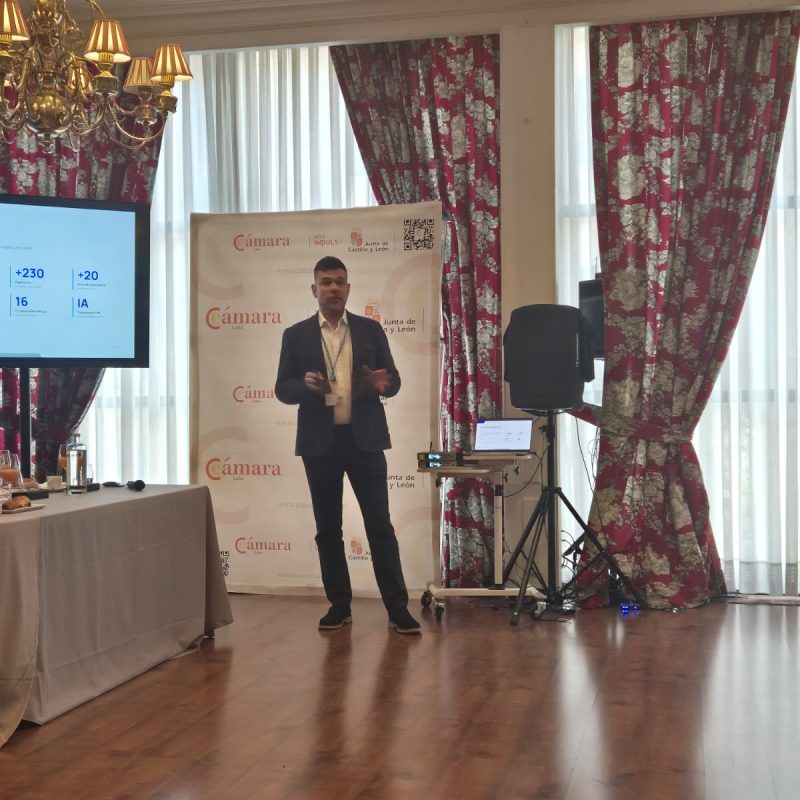
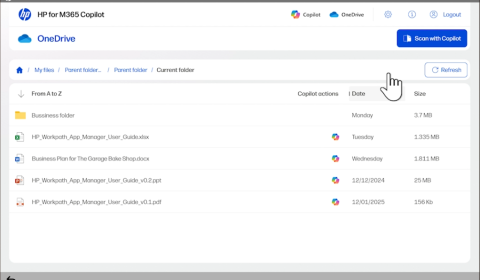

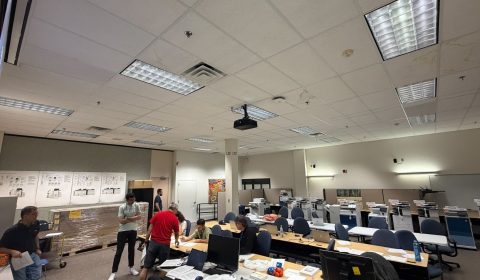
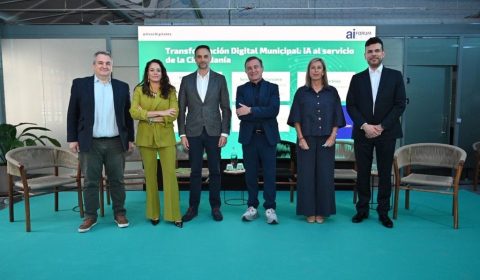

AI Laboratory
Leading the way in ethical AI innovation
At the HP SCDS AI Laboratory, we advance ethical innovation in artificial intelligence to support business transformation and improve people’s lives.
Mission
Our mission is to drive ethical innovation in artificial intelligence, helping businesses transform through advanced technologies while creating a positive impact on people’s lives.
- To achieve this, we develop and promote practices that ensure AI systems are transparent, fair, and accountable. In this way, we prioritize responsible development at every stage. As a result, we contribute to a more sustainable and trustworthy digital ecosystem.
Vision
Our vision is to advance artificial intelligence toward a more inclusive and sustainable future. To accomplish this, we aim to be recognized as a center of excellence where creativity, collaboration, and innovation come together to deliver cutting-edge solutions.
- At the same time, we strive to pioneer technologies that are not only powerful and efficient but also ethical and privacy-respecting. Consequently, we contribute to a safer and more equitable digital world.
Purpose
Our purpose is to harness the potential of artificial intelligence to address complex challenges across diverse fields, including healthcare and environmental sustainability.
- In practice, we empower organizations to innovate and adapt in a constantly evolving environment, while enhancing human experiences and promoting equal opportunities. This approach is grounded in strong ethical principles. Therefore, every AI application we develop remains transparent, fair, and accountable.
AI applied to business
Services
Development of AI solutions
We design and develop tailored artificial intelligence solutions to address specific client challenges.
Our work spans recommendation systems, predictive analytics, chatbots, and computer vision. In this way, we use advanced algorithms and technologies to transform business processes and improve outcomes.
AI research
We conduct continuous research in artificial intelligence, exploring new techniques, algorithms, and applications to stay at the forefront of innovation. At the same time, our team collaborates with academic and industry partners to drive the advancement of AI knowledge. As a result, these advances are translated into practical and effective solutions.

ARTIFICIAL INTELLIGENCE
We continuously explore artificial intelligence, developing new techniques and collaborating with partners to turn innovation into real-world solutions.
R&D in Artificial Intelligence
AI research
Projects
- Deep learning for diabetic retinopathy detection.
- Digital twins for pharmaceutical production processes.
- Infrastructure maintenance using deep learning.
- LLMs for business processes using RAG and guardrails.
- Evaluation of LLM technologies for Personal Systems.

Research
This initiative focuses on AI-driven projects, exploring a wide range of innovative applications across multiple fields.
From medicine and environmental conservation to manufacturing and education, our work addresses diverse challenges and opportunities.
Ultimately, through artificial intelligence, we aim not only to solve complex problems but also to transform how people interact with the world around them.
- Voice assistants for sugar-level information and alerts.
- Automatic transcription of sign language to spoken language.
- Browser extension for NLP queries on the current page.
- Messaging bot to summarize messages in highly active groups.
- AI-based chatbot to answer questions from a configurable knowledge base.
- AI-based machine translation.
- Comic illustration from text using deep learning.
- Detection of anomalous behavior in HP printers using deep learning.
- Application of computer vision and ML techniques to process 19th-century manuscripts.
- Identification of ingredients and nutritional information using ML/DL.
- Generation of 3D models using NeRF for augmented reality visualization.
- Visualization of water bodies and related data (pollution, plastics, etc.).
- Locating a puzzle piece within a puzzle using computer vision and ML.
- Automatic image segmentation for printing, including layer selection and gap filling.
- AI for filtering and categorizing images from an external source (search engine).
- Running ML/DL projects in a shared environment.
- Optimization of multilayer optical structures using DRL.
- Hybrid quantum/classical algorithm for classifying cats and dogs.
- Plot complexity estimation using deep learning.
- Reinforcement learning in Unity for the construction industry.
- Platform for running ML/DL models on mobile devices in private networks.
- CLPU laser beam steering using ML techniques.
- Mobile note-taking application with AI-based automatic tagging.
- Basketball and player tracking for dataset creation.
- Basketball play identification based on player and ball positions.
- Inference of alternative hierarchies in an enterprise based on user interactions.
- Applying AI to HR data to minimize company turnover.
- Automatic enrichment of data contained in the standard format used for 3D printing.
- Prediction of epidemic outbreaks and health risks using AI in social networks.
- Determining the origin and type of sounds in a physical system using an IoT device and two microphones.
- AI reimagining of the paintings in the chamber of Doña Sancha (San Isidoro, León, Spain).
- Application for status and error code support in devices with no or limited display.